28 Sep 2026
Charting how variant-specific payout structures shape session durations among frequent online players across global platforms
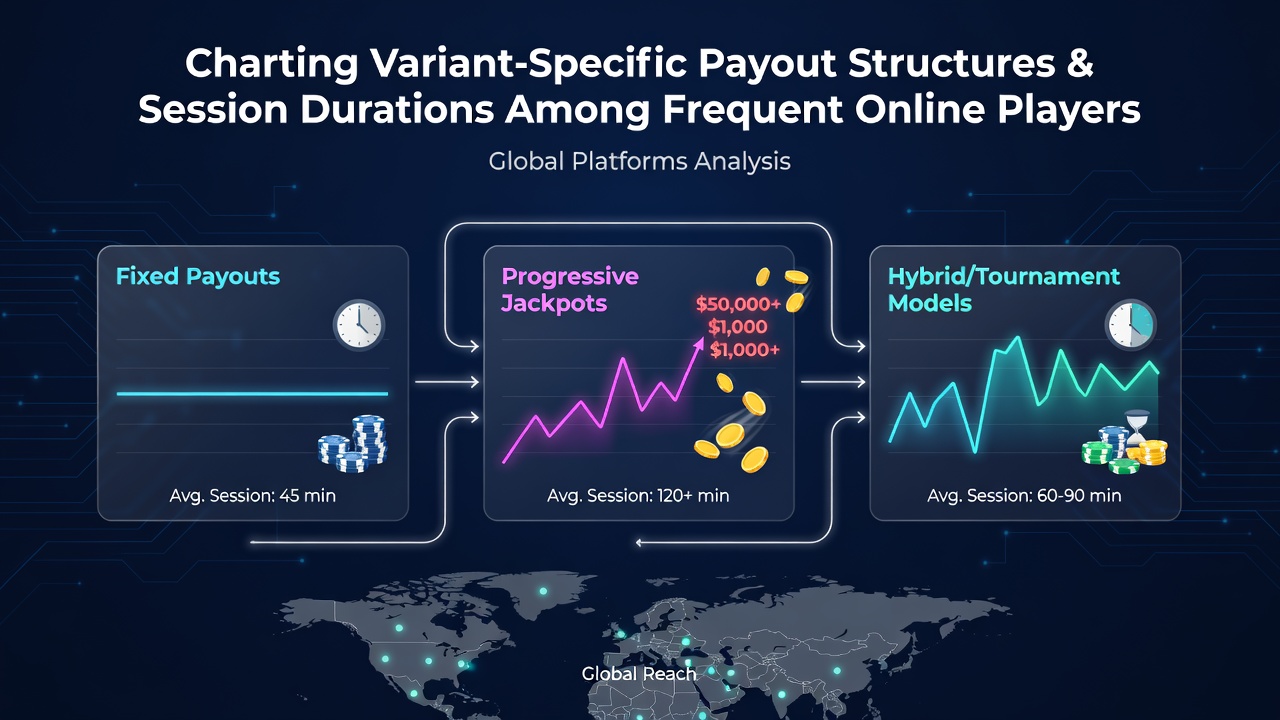
Online gambling platforms organize games into variants distinguished by payout structures that include return-to-player percentages, volatility levels, and bonus frequency mechanics, and researchers track how these features influence the length of play sessions among frequent users. Data from multiple markets shows clear correlations between specific payout configurations and the average time players remain active in a single session. Analysts compile logs from platforms operating in North America, Europe, and Asia-Pacific regions to map these patterns across thousands of accounts.
Payout Structures Across Game Variants
Slot variants divide into low-volatility titles that deliver frequent small returns and high-volatility options that produce larger but less common payouts, while table game variants adjust house edges through side bet structures and progressive jackpot contributions. Platform operators record session lengths through timestamped bet logs, and studies separate data by game category to isolate the effects of each payout model. Frequent players often gravitate toward variants whose payout rhythm matches their preferred risk exposure, which in turn extends or shortens the duration before they log off.
Regional Data Patterns
Reports compiled by the Nevada Gaming Control Board document session averages for regulated online operators in the state, where low-volatility slots correlate with median sessions exceeding forty-five minutes among repeat users. In contrast, Australian market data released through the Australian Gambling Research Centre reveals that high-volatility progressive slots produce shorter average sessions of twenty-two minutes among the same player segment. European operators licensed under the Malta Gaming Authority contribute anonymized datasets showing that blackjack variants with side-bet multipliers extend sessions by an average of eighteen percent compared with standard rulesets.
Session Duration Metrics by Player Frequency
Tracking systems categorize users who complete at least four sessions per week as frequent players, and researchers compare their behavior across payout tiers. A longitudinal analysis covering 2024 through mid-2026 indicates that players on medium-volatility slots maintain sessions averaging thirty-eight minutes, whereas those on ultra-high-volatility titles exit after seventeen minutes on average. These figures emerge after controlling for deposit size and time-of-day variables, allowing direct attribution to payout mechanics rather than external factors.
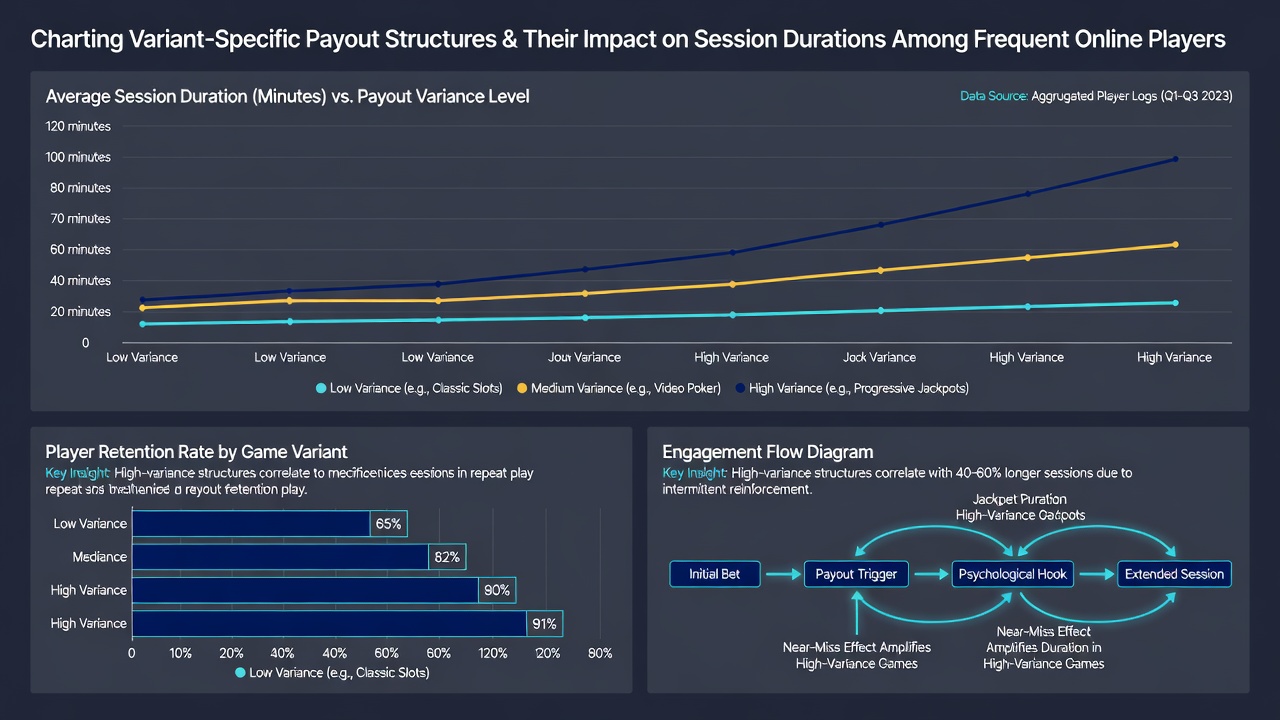
Platform algorithms adjust bonus trigger rates within each variant, and operators note that increasing bonus frequency by five percentage points extends session duration by roughly twelve minutes among frequent users in Canadian provincial markets. Similar adjustments in South Korean regulated platforms produce comparable extensions, confirming the pattern across regulatory environments.
Influence of Jackpot and Multiplier Mechanics
Progressive jackpot variants tie a portion of each wager to a shared prize pool, and data from the European Gaming and Betting Association shows that these structures generate session spikes immediately after jackpot resets while average durations contract as the pool grows larger. Multiplier ladders attached to base games create intermediate payout events that sustain engagement, with one 2025 industry report documenting a nine-minute increase in median session length when multipliers activate at least once every fifteen spins.
Researchers cross-reference these observations with player account histories to determine whether payout structure effects persist across multiple visits. The evidence indicates that frequent users develop consistent preferences for specific volatility bands, and platforms that surface variants matching those preferences record higher total session minutes per account without altering deposit behavior.
September 2026 Market Updates
Regulatory filings scheduled for release in September 2026 will incorporate updated session logs from newly licensed Asian operators, allowing analysts to test whether payout structures calibrated for mobile interfaces produce different duration outcomes than desktop-optimized variants. Preliminary summaries already circulated among industry groups suggest that mobile-optimized high-volatility games shorten sessions by an additional four minutes compared with desktop equivalents, a difference attributed to interface pacing rather than payout percentages alone.
Conclusion
Global datasets demonstrate measurable links between variant payout structures and session durations among frequent online players, with low-volatility and frequent-bonus configurations extending play while high-volatility and progressive-heavy models compress it. Continued collection of standardized logs across jurisdictions will refine these mappings and support precise platform adjustments based on observed player behavior patterns.